

A grain moisture tester measures the water content of a grain sample in seconds, so you can decide whether to store, dry, blend or discount a load.
Moisture decides everything after harvest: the grade on the ticket, the dryer setting, how long the grain will keep in the bin. One point of error on a busy receiving day adds up to real money. A tester that is fast, calibrated for your crops and easy for every grader to use pays for itself in one season.
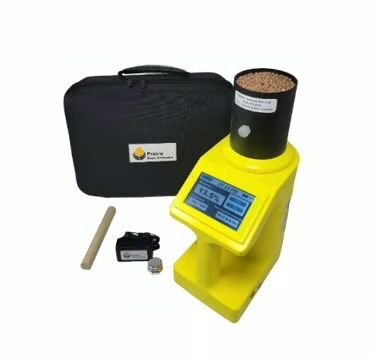
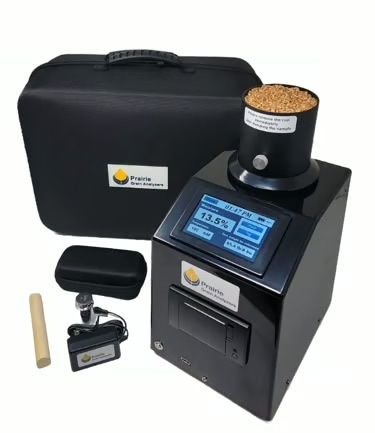
How grain moisture testers work
Most testers estimate moisture from an electrical property of the grain, usually its capacitance (dielectric constant), because water changes how grain reacts to an electric field. The reading is then converted with a calibration for each crop and corrected for grain temperature and, on many units, for test weight. That is why the right crop setting and a good temperature correction matter as much as the sensor.
The reference for every tester is the oven method, where a sample is weighed, dried and weighed again. Grading rooms check their testers against known samples at the start of the season. On the farm, the most useful habit is to compare readings at the combine, at the dryer outlet and at the bin, so you know where moisture actually changes.
What you gain
Right class, every load
Accurate moisture puts each load in the right moisture class.
Better dryer control
Testing in and out of the dryer stops over-drying.
Safer storage
Know before binning which grain needs drying or aeration.
Where it is used
- Grading rooms at elevators and terminals
- Checking incoming and outgoing moisture at the dryer
- Field and bin checks on large grain farms
- Feed mills and processors receiving grain
By crop
Each crop has its own defects, settings and market specifications. Choose yours:
How to choose
| Benchtop or portable | Benchtop units for the grading room; portable units for the field, the dryer and the bins. |
|---|---|
| Crop calibrations | Check that every crop you receive is calibrated, including pulses and specialty crops. |
| Temperature correction | Cold or hot grain gives false readings without automatic correction, a real issue in a Canadian fall. |
| Records | Printing or exporting results makes every reading easy to justify. |
In Canada
Canadian grain is bought on moisture classes (straight, tough, damp) set by the Canadian Grain Commission for each crop. Testing accurately at intake is what puts each load in the right class. See our guide to safe storage moisture by crop.
Frequently asked questions
How accurate is a portable grain moisture tester?
A good portable tester is close to a benchtop unit when the sample is representative and the grain temperature is within the tester’s range. Check it against a reference at the start of each season.
Why does frozen grain read wrong?
Most testers measure electrical properties that change with temperature. Let very cold samples warm up in a sealed container before testing.


