A grain cleaner removes dockage (chaff, weed seeds, broken kernels, stones and dust) so the grain meets its grade, stores better and sells for more.
Dockage costs you twice: you are docked on the ticket, and dirty grain heats faster in the bin. A cleaner matched to your crops and your throughput turns lower-grade grain into a product your buyers pay full price for.



Pre-cleaning, cleaning and fine cleaning
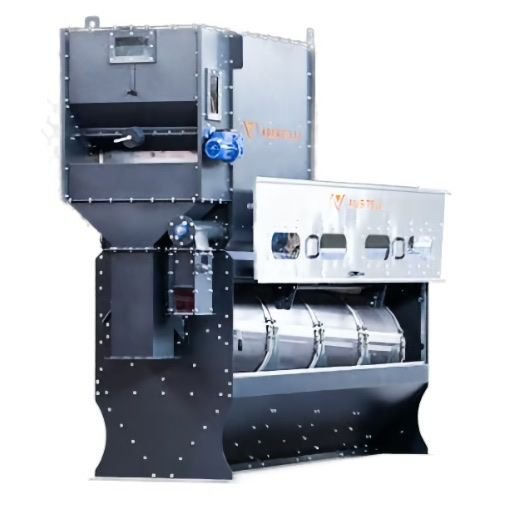
Grain facilities usually clean in stages. Pre-cleaning at receiving is fast and coarse: a scalper or rotary cleaner removes straw, chaff, cobs and large trash before the grain reaches the dryer or the bin. Cleaning to grade removes enough dockage to meet a contract. Fine cleaning, often for seed, food or export, adds precise screens, strong aspiration and sometimes length or density separation.
Capacity is the most common sizing mistake. A cleaner rated at a given tonnage on wheat will handle much less on canola or oats, because screens and air must be set finer. Ask for capacity on your hardest crop, at the cleanliness you need, and plan dust collection at the same time: every cleaner produces dust that must be captured.
What you gain
Better grade, better price
Lower dockage means fewer deductions and access to premium buyers.
Safer storage
Clean grain aerates evenly and is less prone to hot spots.
Lower drying cost
Removing fines and chaff before the dryer saves energy and reduces fire risk.
Where it is used
- Pre-cleaning at receiving, before drying and storage
- Final cleaning for export and food-grade grain
- Seed cleaning plants
By crop
Each crop has its own defects, settings and market specifications. Choose yours:
How to choose
| Throughput | Size the cleaner to your intake leg, not the average day. |
|---|---|
| Crops | Screens and air settings differ for canola, wheat, pulses, corn and soybeans. |
| Technology | Rotary drum, flat screen, aspirator or a combination. |
| Dust | Plan the aspiration and dust control at the same time. |
In Canada
Dockage is assessed and deducted under Canadian Grain Commission rules. Cleaning to a tighter specification is often what makes Canadian grain eligible for premium export and food markets.
Frequently asked questions
Should I clean before or after drying?
Pre-cleaning before the dryer reduces fire risk and drying cost; final cleaning is done before shipping.
Which cleaner is best for canola?
Canola needs fine screens and careful aspiration because of its small seed size. We size the screens to your target specification.
Can the same cleaner handle several crops?
Yes, with quick-change screens and adjustable airflow.